Friday, September 25, 2009
Prospects for Copenhagen
Things are looking grim for the US position as we head into Copenhagen in December. Climate legislation emerged out of the House this summer, but has been stalled in the Senate due to the focus on health care. Senators Boxer and Kerry promise to have a draft of their bill out by September 30. China overshadowed the US at the UN Summit with its pronouncement about their cuts to energy intensity. While China gave few details, it takes the wind out of the sails of the US argument that we shouldn't do anything until China takes action. The Economist features a good summary of the world stage at this time and the implications of pushing the Senate too hard. It will be interesting to see how this unfolds in the march to Copenhagen.

Tuesday, March 31, 2009
Blogging will commence in August 2009
I will start blogging here again when the fall semester starts. In the meantime you can follow me on Twitter at EnviroWonk.
Friday, December 19, 2008
Regional Greenhouse Gas Initiative Moving Forward
The Regional Greenhouse Gas Initiative (RGGI) sold 32 million emission allowances this week for $106.5 million ($3.38 per allowance). This auction follows the first that occurred in September. RGGI's executive office reported that demand for allowances exceeded supply by 3.5 times.
Under RGGI participating states (New York, New Jersey, New Hampshire, Massachusetts, Maryland, Maine, Connecticut, Delaware, Vermont and Rhode Island) will cap their emission at current levels through 2014. At that time total emissions will be cut by 10% through 2018.
A boston based research firm ENE, estimated that RGGI regional emissions levles are 16% below the prescribed 2009 cap due to high coal, oil and natural gas prices this summer.
Under RGGI participating states (New York, New Jersey, New Hampshire, Massachusetts, Maryland, Maine, Connecticut, Delaware, Vermont and Rhode Island) will cap their emission at current levels through 2014. At that time total emissions will be cut by 10% through 2018.
A boston based research firm ENE, estimated that RGGI regional emissions levles are 16% below the prescribed 2009 cap due to high coal, oil and natural gas prices this summer.
Tuesday, December 16, 2008
Alaskan Sea Otters Protected

As reported in E&E News today:
"The Fish and Wildlife Service released plans today to declare much of southwestern Alaska's coastline as critical habitat for sea otters, a move that environmentalists say could add regulatory hurdles to proposed oil and gas development there.
The habitat designation is part of a legal settlement with the Center for Biological Diversity, which successfully sued in 2005 to list Alaskan sea otters under the Endangered Species Act and again in 2007 to force FWS to declare critical habitat by October 2009. Studies show that species with critical habitat are twice as likely to recover as those without, the advocacy group said."
Obama Energy and Environment Team Announced
Yesterday the Obama transition team made official what has been floating around for a while:
Carol Browner was named Assistant to the President on Energy and Climate Change
Steven Chu will be Energy Secretary
Lisa Jackson will head EPA
Nancy Sutley will chair the CEQ
Ken Salazar is rumored to head the Interior Department
Carol Browner was named Assistant to the President on Energy and Climate Change
Steven Chu will be Energy Secretary
Lisa Jackson will head EPA
Nancy Sutley will chair the CEQ
Ken Salazar is rumored to head the Interior Department
Monday, December 15, 2008
Coal, coal, coal....
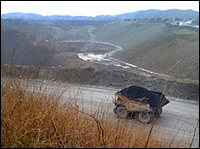
There was lots in the news this last week about coal.
There is an all out assault on the concept of "clean coal" by some heavy hitters on the environmental advocacy side of the ledger: see this video here where the League of Conservation Voters head Gene Karpinski explains clean coal is an oxymoron.
NPR presented an interesting pro/con discussion and interview last week on the same topic. This one features Al Gore and Joe Lucas of the American Coalition for Clean Coal Electricity.
NPR also did a good story on mountaintop mining that gives the goal industry a victory just as the Bush administration leaves office.
Friday, December 12, 2008
New Mexico Cooperative Conservation Agreements

A new collaborative conservation agreement was put into place this week to protect the lesser prairie chicken and the sand dune lizard, according to the Land Letter. Both species are located in the Permian Basin-- one of the biggest oil gas producing regions in the West.
The initiative pulls together the US Fish and Wildlife Service, the Bureau of Land Management, private landowners, energy companies and ranchers. USFWS has determined that both species qualify as listed species. The conservation agreement is designed to avoid lengthy consultation measures if the signatories take specific measures or pay into a fund to support the conservation of the species.
Habitat for the species spans multiple jurisdictions and the agreement depends upon broad participation by all participants in the region. It is unclear how energy company involvement will be affected with the current fall in energy prices.
Subscribe to:
Comments (Atom)

